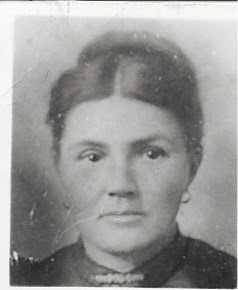
Wednesday, July 23, 2014

James Ephraim & Birgithe Jensen - history written & edited in 1976 by Hattie Knight


How are you related to James Ephraim Madsen & Birgithe Jensen?

Larry's mom, Hattie was the oldest daughter of Mads Jonathan Madsen who is the third son of James & Birgithe


James Ephraim Madsen was born on 21 January 1844 in Bjerrede, Terslev, Denmark. He was baptized into the Church of Jesus Christ of Latter-day Saints 28 March 186 and was married to Birgithe Jensen in the Endowment House in Salt Lake City on 6 July 1869. He passed away at his home in Salem on 23 March 1914, of carcinoma of the stomach. A doctor had been called in on 23 January 1914. He was 70 years and 2 months of age. His youngest son, Elmer was 28 and 8 months old and Elmer’s oldest son, Donald was 11 months.
            
the same home today

At the time he joined the Church he took Ephraim as his middle name. He was disowned by his family in Denmark. At that time he said, “I have a choice, I can be better or I can be worse and I’m going to be better,”
            His first Christmas day in American was spent as a woodcutter in Ogden Canyon with a lunch of bread and water.
            When work was to be done, church or community, always he and his boys were there. The Church was everything. He said he would do it all again. Some other thoughts attributed to him follow:
·      If that’s the way the Lord wants it, that is the way it’s going to be.
·      The secrets of life are secret because so few people really find them out.
·      Some very special people will come from the shadows of these mountains (the mountains around Salem).
One final message from James Ephraim Madsen: If this counsel or work be of men, it will come to naught: But if it be of God, ye cannot overthrow it; lest haply ye be found even to fight against God. (counsel of Gamaliel Acts 5:39)
His finances are not completely known to us, but after the farm and the home were sold, sometime in 1915 (Will ran the farm for one year) each child inherited in 1916 enough to make a real change in their way of living. Two of the boys built nice homes (not all from this legacy). Again in 1919 each child received about $50.00 from a relative in Denmark. Elmer was 29 years old in 1916 and 32 years old in 1919. One wooden box contained all the belongings he brought from Denmark.
      He would always cut a stick to measure the onions, those of proper height were pulled and sold. He apparently was very exacting and meticulous about the work of the farm.
      During the summer of 1913 he came alone and unannounced to Salt Lake City to see his new grandson, Donald. He brought a brand new dollar bill and expressed his pleasure at seeing the baby many times. He also apologized for not feeling too well.
      It was probably impossible to find a discrepancy between the way this man lived and the way he believed.

A RECOLLECTIONS OF RAE MADSEN KERN
            One day while I was attending the BYU, and I’m sure it was prearranged because it went all so smoothly, my father and I went to Salem to visit some of his friends. One very special person was Mrs. Andrew Ottesen (Larcena Olsen) daughter of Soren Olsen, early Salem settlers from Denmark. They arrived “just after the pioneering had been done” and acquired the land that Andrew Ottesen was faming. Her father was reported to be a very good farmer who took great pride in his work. Larcena married Andrew Ottesten from the Spanish Fork river bottoms. They were farmers and very thrifty. Their city home was east and across the street form John Flygare’s. When Andrew’s father died the main responsibility of caring for his mother fell to him. His father had asked him to be good to his mother and help her all he could. This he always did – fair and honest with his dealings with her and she loved and trusted him. She passed away at the age of 93 in 1952. The three children born to this family were: Mary, married to Elias Neilson of Spanish Fork; Andrew married LaVian Done of Payson and Ethel married to Raymond Hanks, a successful farmer at Burley, Idaho. This is the family who took care of Kate B. Carter’s mother when she arrived from Denmark completely alone and just about nine years old.
            This day was special in many ways and I have often wondered if I would be able to capture the message adequately and accurately enough to portray this person I would only really know at some future time. Most of the conversation was about James E. Madsen. There were many fond remembrances of him as a great strength in the life of this family.
            Apparently his children could not have fully appreciated his strengths, his devotion to God and his goodness to his fellow man. Perhaps he found it difficult to express his love for his children, nevertheless, the message very clearly was that in spite of any possible misunderstandings between father and sons, this was a man of whom it was probably impossible to find a discrepancy between what he believed and what he lived. His philosophy of life was “if that’s the way the Lord wants it, that’s the way it’s going to be.” As far as he was concerned, the only problem was in finding out what the Lord wanted. That their father was a very special person was something his children were proud of and knew well.
            Mrs. Ottesen was at the time 85 years old, spry and cheerful. We were shown her flowers and vegetable garden and she proudly displayed a piece of farm equipment that had once belonged to James Ephraim Madsen. The total exact conversation is lost forever, but an impression of this man was formed that I have tried to capture in the form of a letter which I will call “To my child from you grandfather,”
            Mrs. Ottesen also “happily” sang this song to us – Daddy joined in. It is probably the only time in my life that I have heard him song.  Again I would like to capture something special.


“God Moves in a Mysterious Way”
God moves in a mysterious way His wonders to perform;
He plants his footsteps in the sea and rides upon the storm.
Deep in unfathomable mines of never failing skill,
He treasures up his bright designs and works his sovereign will.
Ye fearful Saints, fresh courage take; the clouds ye so much dread
Are big with mercy and shall break in blessing on your head.
Judge not the Lord by feeble sense, but trust Him for His grace;
Behind a frowning providence He hides a smiling face.
His purposes will ripen fast, unfolding every hour;
The bud my have a bitter taste, but sweet will be the flower.
Blind unbelief is sure to err and scan His works in vain;
God is his own interpreter, and He will make it plain. (in chanting style)
                                                                        William Cowper (1731-1800)

            Converts from Denmark, in Salem, practiced their English with these two words. The chanting style made it easy to sing (?) while working; the rhythm and rhyming made the pronunciation easier. It was a familiar and popular religious verse and song of the day so its meaning was probably familiar to many. How often have all of us heard parts of its message in many conversations with parents and grandparents. How often have all of us heard it softly chanted strictly as a personal private affair. That is the earliest memory of my grandmother, Birgithe Jensen Madsen.

BIRGITHE JENSEN MADSEN - Mother
en Family History Transcript


BIRGITHE JENSEN MADSEN - MOTHER


Birgithe Jensen Madsen was born in Dronninglund, Longenhjoring, Denmark on 23 July 1853 to Paul M. and Meta Kyerstine Olsen Jensen. She was baptized into the Church of Jesus Christ of Latter-day Saints 22 April 1866 by Peter Nelson and confirmed by him. After the family accepted the gospel they immigrated from Denmark to Utah in 1866. They arrived in Salt Lake City 8 October 1866 and settled in Spanish Fork. They dug a dugout to store their things and lived in a tent until they could build a two room adobe house. Our great-grandfather made the adobe for the house and Grandmother and Aunt Hannah helped mix the mud and water for them. They would get in barefooted and run around and dance and had all kinds of fun doing it.


Birgithe had no chance to go to school after she got to this country and had very little schooling in Denmark. She estimated about a year in all. She went to work about a year after she came and worked until she was married at the age of sixteen to James Ephraim Madsen. They were married in the endowment house at Salt Lake City by Daniel H. Wells. They lived in Salem until his death in 1914 and she continued to live there except for a short time when she lived with her only daughter, Delia, because of poor health. She passed away 15 September 1932 and was buried in Salem, Utah.

Some of her memories of the trip from Denmark have been recorded by Delia for the Daughters of the Utah Pioneers. She stated that they left a comfortable home, sold everything they could and came to Utah for the sake of the gospel. Birgithe was 13 and her sister Hannah was six at the time. They sailed on the ship Kenilworth from Hamburg, Germany in May of 1866 with 684 Scandinavian Saints on board under the direction of Samuel D. Sprague and landed in New York on July 17.

When they were on the ocean the ship caught fire. Birgithe's father was acting as guard that night. While he was making his rounds a man who was sitting up with his sick wife showed him where the fire had burned a big round hole in the ship. Our great-grandfather could not speak a word of English so he had a hard time giving the alarm, but finally he made one of the deck hands understand. Some of the crew were very frightened. The thought the ship was sinking, but it was only the water they were using to put out the fire and it was not long before the captain came and told them not to be afraid; the fire was out and they would soon be on their way. It took eight weeks to cross the ocean. In New York they were advised to take a condemned train because it was so much cheaper. They were eleven days on the train as they went up through Canada. When they arrived in Boston, a friend of theirs, Mrs. Christanna Peterson, became ill and on the first train going west from Boston she died, leaving her little grand-daughter, Mary Jensen, eight years old, who was migrating with her. Mary came the rest of the way to Utah in the care of Birgithe's parents. She became Birgithe Jensen's companion - walking most of the way across the plains together.

When they were nearing Chicago the Elders warned them to be real quiet as there might be a mob waiting for them if they found out they were Mormons. One fellow refused to close the window he was sitting by in the train, as he had been asked to do. He kept sticking his legs out and when they stopped, someone from outside grabbed them and hung onto them, After that he was glad to close the window.
They put rocks on the track thinking it would cause the train to run off into the lake, but it seemed as if The Lord was with them for by some miracle it ran off the opposite way into a forest of trees and bushes. Quite a few were shaken up and received cuts and bruises, but otherwise unharmed.

They came down the Missouri River on a flat boat. While on this boat a crazy woman furnished them with amusement. The cooks were peeling apples; she asked for one and they gave it to her. Then she kept asking for more and was told that she could not have any more so she watched her chance and grabbed the pan and threw them all into the river. Another time she took a bath in the water they kept in a large stone jar for drinking. The Mormons were not allowed to drink that water; they had to drink river water. I suppose the sailors preferred the river water too after that incident.

At Omaha they were met by wagons from Utah and left on August 8th with Andrew L. Scott's ox train. Hans Rigtrup was their teamster. There were 300 people in this company with 49 wagons. All that were able had to walk so Grandmother Jensen and Mary walked most of the way as did Birgithe. Hannah was only six years old and not very well so was allowed to ride. It was hard to keep in shoes, Birgithe's mother made shoes of old felt hats or anything she could get to try to keep their feet covered; she was a very good dressmaker and used her skill on the shoes. But they didn't last long and often their feet were sore and bleeding from walking so much. Grandfather Jensen had been in comfortable circumstances in the old country and sold out for what money he could get and then helped many immigrants who were less fortunate than himself by lending them money. Some were anxious to pay back and did as soon as they could, but he received nothing from others.

When they were in Laramie, Wyoming, Birgithe and Hannah were walking down the road together and an old lady stepped out of a log house and caught hold of Hannah and took her in the house. Both girls screamed until their father came. The old lady explained that she wanted to help the child. She said she looked delicate and would never live to cross the plains. The old lady took them in afterward and gave them a good meal which Birgithe did not share as she could not be found. Hannah crossed alright and lived to be over 70 years old.

James Ephraim and Birgithe immigrated at the same time, but she did not meet him until she came to Spanish Fork. he was the only one of his family to accept the gospel and his parents and sisters seemed to think he had disgraced them by joining the Mormons. After they were married they moved to Salem and built a dugout to store their things. They camped in a wagon until they could build a one room adobe house for which her father made the adobe. Birgithe was often left alone while her husband was away freighting or working int he canyon. She was sometimes quite frightened of the Indians. She often went into the fields gleaning wheat and thought nothing of walking to Spanish Fork to visit her parents.

A few years later they built a larger house, a two room adobe, and as the family grew they added to it. As they prospered a little they built a ten room brick house.

Mads Jonathan Madsen is the tall son in the middle back

She became the mother of eight sones and one daughter. At the time this was written one son and preceded her in death. John passed away at the age of 54 on July 18, 1930. She then had eight living children, 56 grandchildren and 17 great-grandchildren. Her husband had passed away on 26 March 1914 after a useful and exemplary life. He was always a hard worker and kept busy until almost a week before his death, although he had been very ill for almost two years. He served for many years as chairman of the Board of Education and was an active church worker. She was also kept busy in the church. She was treasurer in the Relief Society for 27 years. She spent many hours making temple clothes for the dad and other sewing that was needed. She helped lay out the dead and waited on the sick. She was active in the Religion Class for many years.

She was of a cheery happy disposition and a good wife and mother. She always thought of the welfare of others and did a good turn whenever she could. Through her many trials she always tried to look on the bright side of things. (Most of the above is from the biography prepared by Delia for the Daughters of the Utah Pioneers)

SOME MEMORIES OF GRANDCHILDREN

Bea Kimball remembers her sister telling of sitting on the porch of grandmother's Salem home and watching her making beautiful beaded necklaces which she gave to her grandchildren. Grandma would say, "Are you a princess, I'm making this for a princess." This was typical of her interests and talents and love for her family.
         I remember (Hattie Knight) how we always looked forward to a visit from Grandma Madsen each summer. How she got to Idaho I don't know, but she would spend about a week with each family - John, Frank and Irvin. She would sit for hours and teach me to tat and to crochet. She was an expert at both. She had a very painful hip and used a cane during her later years. Her needlework was beautiful and given generously to each family.


Wednesday, June 26, 2013

Jewel II


Jewel and Tootsie became life long friends with the exception of a short time that was foreshadowed by their theme song. When they were in second or third grade a new little girl came to town. Her family seemed to be well off and it was clear that the little girl always got what she wanted. What she wanted then was to replace Jewel as the social focus this of her class.  one by one Jules friends started going home with the new zero play after school and finally Tucci join them left you allowed. When the little girl held a big party and invited almost every girl in the class except jewel to see was mortified. She didn’t go to the party. She went to Jewell interiors and said she was sorry. The reason the little girl had so many friends all of a sudden is that she bribed them with candy and other presents. They hugged and made up and there friendship continued without further interruption.

Jewell and Tucci were inseparable. They played together when they were little. When they got a little older they were allowed to make an annual excursion to the big city of Provo, Utah. They took the bus from Pleasant Grove to Provo which was 20 miles away. They had soldiers at Walgreens in the town center at University and Center Street. They shopped in all the big stores — Woolworth’s, Kress, Firmage’s and Taylor Bros. Woolworth’s and Kress were national 5-and- 10 cent stores. Fimage’s and Taylor Bros. were locally owned department stores. Kress was owned by the S.S, Kresge Company. The company is now called Kmart. Rumor had it that Kresge changed their name in to Kress because they wanted to avoid being known as a store with Jewish ownership. If that’s the case they miss the boat. Mormons identify with the Jews. Jewish owned stores were successful in Salt Lake City.

Other notable accomplishments in elementary school included being the fastest runner in the third grade including the boys, and taking piano lessons. The children in the open family were encouraged to develop their musical talents. Prominent in their home was a beautiful baby grand piano. The children were all encouraged to take lessons. They promised that the child who became most proficient on the piano could have the piano when they had established their own home. By the time you’ll got to high school she was winning competitions on the piano. She played for church a Sunday through high school and college. When her folks retired and moved to a smaller home Jewel was given the piano.

Jewel and Gayle continued their friendship through high school. They roomed together in college. During her junior high and high school years Jewel kept busy. When she was 12 she started picking fruit in the summers to learn extra money.  Being a fruit farmer at heart Lew  OLpin strongly encouraged his girls to pick fruit in the summers.The boys worked in the lumberyard. Jewel made it sound like he was a match for the overzealous Little League fathers of today.

Jewel:   Nothing made my father happier than getting up early in the morning to wake me at   5:30 AM to pick berries. When I got home he would interrogate me.

Dad: “How many boxes did you fill?”

Me: “6 1/2.”

Dad: “Who picked more?”

Me: “Nobody! I picked more than anybody else.”

Dad: “How much money did you make?”

Me: “$2.75.”

Dad: “Not bad. Keep it up.”

A paper route was a prized economic opportunity for boys 12 to 15. Dee got one of the prized afternoon paper routes when he was 12. By the time he was 15 he had better things to do with his afternoons. It was not cool for someone his age to still be delivering newspapers. So in order to preserve the paper route for Gerald, Jewel became the afternoon papergirl. For three years jewel rushed home from school, changed to blue jeans, put her hair in a ponytail and hopped on her bike and rode downtown to pick up the papers and deliver them. By the time she was 15 she was dating. She told me how undignified it was for her to hurry home after delivering her last paper, hop off her bike run in and get ready for a boy to pick her up and take her to Salt Lake to the Rainbow Rendezvous to dance to the music of one of the big bands and listen to the singing of Nat King Cole. Nat was her favorite. Finally Gerald took over the paper route when Jewel was 16.

Now Jewel was old enough to work her kumu off on the midnight shift at the Pleasant Grove cannery. The word kumu, pronounced Kumy by Jewel’s family is a Maori word meeting backside — Lew’s gift from New Zealand in addition to Dick Marsh. Now Jewel has to tell her dates to get her home by midnight so she can run in change into Jeans and hurry the few blocks to the cannery. Jewel’s competitive drive was demonstrated again in the cannery. She was such a fast and accurate worker that she had the honor of being on the end of the line to finish up all the produce that made it that far. Her partner at the end of the line was a middle-aged woman who could give her a run for the money. She spent the night telling Jewel about the joys and pitfalls of marriage.

In addition to working her kumu off she had an active social life. She dated most of the hot guys between Orem and American Fork — Jerry Pulley from American Fork and David Harvey from Pleasant Grove for example. She did well in school. She loved Stell Fenton’s English classes. She was a student leader. In fact she was so popular she was one of the cheerleaders. The first time I saw Jewell was at a football game.

It was the first game of the season. BY High School was playing Pleasant Grove High School on the Pleasant Grove field. I played both offense and defense at end for BY High School. The Daily Herald sports page hyped it as a big game because they predicted BY High School and Pleasant Grove High School were the two best teams in the region. Of course BY High won 28-0. We won so easily I sat out most of the fourth quarter. I noticed the cute little Pleasant Grove cheerleader who like to show off her pretty legs by spinning so hard that her long skirt came up to her waist. 

Jewel and Gayle joined other high school friends to live together in Provo, Utah while they attended Brigham Young University. Jewel admitted that most of the girls thought of Brigham Young University as a good place to find a husband. Most of them figured on being there two years max. I suspect that jewel considered that option. She was popular. She joined the top sorority. She joined the cougarettes who did synchronized dancing at the football and basketball games.

She initially studied to become a secretary. She struggled because taking dictation and typing fast with stressful. I suspect Jewel didn’t like having incompetent men bossing her around either. After two years she changed her major to elementary education. As far as she was concerned she had hit the jackpot. She loved learning and teaching and helping others, especially children. She had plenty of chances to leave school and her frustrations by getting married. Many of her friends did just that. Jewel had lots of boyfriends and revealed to me before I proposed that she had already had five proposals.

I think Jewel’s low-key competitive drive and her good judgment kept her in school until she found a career she loved and  a partner she loved. Between her junior and senior year she spent the summer helping her sister Catherine with her seven children. She also found a job in a savings and loan in Walnut Creek, California. She finished her senior year by doing student teaching at an elementary school in Brigham City, Utah.

After graduation she signed a contract to teach fourth grade at Westmore elementary school in Orem, Utah. She was excited and eager to get on with her next phase of life. She had graduated from college and found a career that she loved. Now she needed to find the man she loved.

Tuesday, June 18, 2013

Jewel


Jewel’a Grandma Ine’s father was Lewis Robison. Ine’s mother was Mary Jane White, Lewis Robison’s third wife. Lewis had four wives and 23 children. Ine lived with herr mother in Pleasant Grove, Utah. She was a feisty little girl who worked to help support her family from the time she was a little girl.  She washed clothes on a scrubbing board and worked in the orchards for long hours to earn 50¢ a day. She was less than 5 feet tall and full of life and energy..

Her husband, Edwin Dee Olpin, was a fruit former before he went into the mortuary business. He took his wife, Ine, with him when he traveled to Salt Lake City to peddle fruit. She was fun to be around and she was good at selling fruit. Edwin took her with him every place he went if it was possible because she was fun to be around. Sounds a lot like Jewel to me.

Edwin and Inez had eight children, Lacy, Lewis, Ann Belle, Joseph, Mary Inez May, Emma, Roy and Donna. They also had a Maori foster son from New Zealand who lived with them for 11 years. His name is Dick Marsh. Family tradition has it that when Jewel’s father Lewis was 17 years old he got in trouble in school. His father, who was his Mormon bishop, decided to straighten them out by sending on a mission for the Church. He spent three years in New Zealand teaching the Maoris.

He learned to love the Maori people. One family felt so close to Lewis that they told him they were going to give him their son Dick when he returned to Utah. Lewis wrote his parents and asked them if they would be willing to raise Dick if he brought him home. Before their answer could reach him he had finished his mission and boarded the ship for home. The Maori family showed up at the dock with Dick holding a little bundle that contained his possessions. So he got on the ship and became a member of the family. Dick was 10 years old at the time.

Dick became Roy’s big brother. They became close friends. How and why Dick returned to New Zealand is a little fuzzy. I have heard several versions—some in print and some by word-of-mouth. Dick was popular. He was handsome, friendly and a talented musician. I was told that he was also a good dancer. He liked the girls and the girls liked him. Dick was not black. He of course was Polynesian. But apparently at that time people made little distinction between African Americans and Polynesians. People discriminated against them equally.

Edwin took his family to Salt Lake to go to the theater. When the cashier at the box office saw Dick he refused to let him in the theater because he was black. Edwin angrily said, “I’ll take my business elsewhere.” So they sent Dick on a mission to New Zealand some say to avoid the possibility that he would marry a white girl. According to written accounts when he finished his mission church leaders advised him to stay in New Zealand. Verbal accounts say it was a little more complicated than that. Dick was not a US citizen and apparently didn’t have the proper documents to return to the United States.

Some accounts say that he was very disappointed, frustrated, angry tand fet hat he had been tricked. If that was the case he got over it quickly. He married a Polynesian girl named Polly and had a large family. He named his children after his American family, i.e. Roy, Emma and so on. When he was in his late 50s he and Polly came to Utah to visit with his Utah family. He was warmly welcomed.

Lewis met a missionary couple named Chase and Delle Murdoch. They were together on the ship returning to the United States for several days. They got to know each other well. Chase was from a small town in southern Utah named Beaver. Della was from an even smaller  farming village west of Beaver called Adamsville. Adamsville is about halfway between Beaver and another small town called Minersville. There is a lead mine at Minersville.

 Della is the oldest of the seven children of Joseph Hiram Joseph and Catherine Elizabeth Griffiths—Della John, Margaret, Mary Ann, Ruben, and Lewis. Dello was 14 years old when her father was killed in a mining accident at the lead mine in Minersville. Catherine was given the job of postmaster and her brothers helped her on the farm.

On the trip home Della invited Lewis to come to Adamsville and meet her little sister Margaret. In the next few years Lewis found lots of excuses to make business deals in southern Utah. While he was there he courted Margaret Joseph. Finally he won her over and they were married. Lew’s brother Joe said that the key was a new Buick convertible that Lew drove when he proposed.

On December 21, 1921 Lew and Margaret joined Lew’s brother Joe and Joe’s bride Violet and traveled to Salt Lake City where each brother married his bride on the same day in the LDS Temple. They made their home in Pleasant Grove, Utah. Margaret thought she was in heaven. She told her children that Pleasant Grove was the Queen city of the West. It is a lovely town set 
at the foot of a rugged, beautiful mountain. Mount Timpanogas dominates the Valley.

Margaret and Lew had six children—LuJean, Katherine, Elaine, Dee, jewel and Gerald. Jewel hated being born between two brothers after three sisters were born first. She felt like Dee was her dad’s favorite and Gerald was her mother’s favorite. Margaret told everyone that he looked like a Joseph to Jewel’s chagrin. I don’t know why Katherine spells name with a K instead of with a C like her grandmother whom she was named after. Mysteries abound.

Lew followed in his father’s footsteps. He and Joe took over the mortuary when his father died in 1926. He was elected mayor. He replaced his father as Bishop. He was a partner in a lumberyard,and a director of the Pleasant Grove Bank. He worked hard and he worked smart. He was financially successful, but was careful with his money. His daughter Katherine applied for a job at the PG drugstore. The proprietor told her, “Yes there is an opening but I won’t give you a job because you are Lew Olpin’s kid. I’ll give the job to someone who needs it” She hadn’t known she didn’t need a job until then. 

Lew’s one extravagance was cars. He felt he needed a nice car for his business. So he bought a new car every two years. His favorite was a Packard which he would drive for two years without changing the oil or doing any maintenance because he knew he was going to trade it in soon. Every two years he would drive his beat up Packard back to Detroit and pick up a new one.

Jewel resented the attention her two brothers got, Gerald from her mother and Dee her father. So she picked on Gerald and made him cry when she thought she could get away with it. When Dee picked on her she fought back. One of her favorite tricks was the sneak up and pour water over his head and then run as fast as she could to the only bathroom in the house, slam the door and lock it. If the house hadn’t burned down you could still see the marks that Dee made on the door by beating on it.

Jewel was much younger than her sisters and she was really cute. Her sister’s felt like she was their favorite baby doll. They liked to dress her up and curl her hair .They discovered that she had nearly perfect pitch.and loved to sing and dance. When she was five years old her sisters decided to make her into a Shirley Temple clone. Shirley Temple was the big rage when Jewel was born in 1935. That’s why she was named Shirley Jewel Olpin. She dropped Shirley and added Knight when we were married.

So when their mother was worried about holding her Mother’s Club meeting in her home the girls suggested that they could help Jewel and her best friend, Gayle Thorne (Tootsie), who is also a cute little girl with perfect pitch, provide the entertainment. It was a huge success and evolved into the traveling Jewel and Tootsie show. They sang and danced in church and civic events for the next couple of years with Jewel’s and Gayle’s sisters acting as producers, directors and publicists. Their signature song was I Don't Want to Play in Your Yard.

Once there lived side by side two little girls, 
Used to dress just alike, hair down in braids, 
Blue gingham pinafores, stockings of red, 
Little blue bonnets tied on each pretty head. 
When school was over, Secrets they'd tell, 
Whispering to themselves, down by the well. 
One day a quarrel came, hot tears were shed: 
"You can't play in our yard," 
But the other said: "I don't want to play in your yard, 
I don't like you anymore, you'll be sorry when you see me, sliding down our cellar door, 
you can't holler down our rainbarrel, you can't climb our apple tree, 
I don't want to play in your yard Iif you won't be good to me." 

Next day two little maids each other miss, 
Quarrels are soon made up, and sealed with a kiss, 
Then hand in hand again, happy they go, 
Friends all through life to be, loving each other so. 
Soon school days pass away sorrows and bliss 
But love remembers yet that quarrel and kiss, 
In sweet dreams of childhood, 
We hear this cry: "You can't play in our yard," 
And the other reply: 
"I don't want to play in your yard. I don't like you anymore, 
You'll be sorry when you see me, Sliding down our cellar door, 
You can't holler down our rainbarrel,. You can't climb our apple tree, 
I don't want to play in your yard if you won't be good to me." 


Thursday, March 28, 2013


My father was Eldred Vinson Knight, and my mother was Hattie Madson. 

I had multicultural grandparents. 

My father’s father was Vinson Philip Knight. His family originated in Bristol, England and emigrated to New England in colonial times. My father’s mother was Mary Jane Hess. Her family originated in Zurich, Switzerland. They emigrated to Pennsylvania in colonial times. 

My mother’s father was Mads Jonathan Madson. His family emigrated to Utah from Denmark in the mid-1800s. My mother’s mother was Ann Amelia Clark. Her family originated in South Wales and emigrated to Malad, Idaho in the mid-1800s.

So each of my four grandparents were raised in a different culture, but they had two things in common. They were European and they were early converts to the Mormon church.

My great great grandfather, Vinson Knight, was one of the first converts of Joseph Smith, the Mormon prophet. He was a prominent church leader in Kirkland, Ohio and in Nauvoo, Illinois where he was the presiding Bishop of the Church and a civic leader. He died at approximately the same time as Joseph Smith. His wife, Margaret McBride, became the plural wife of Heber C. Kimball a counselor to Brigham Young. My great grandfather, James Vinson Knight, was 14 years old when his father died. He was so upset at his mother’s marriage to Brother Kimball that it he left home. In the early years he survived as a freighter, cowboy, and Indian fighter. He was associated with the notorious Porter Rockwell. He later settled down and started farming in Southern Utah.

My great great grandfather, John W Hess, was Pennsylvania Dutch Even though his family originated in Switzerland. He joined the Mormon Battalion that was recruited by the United States government to fight in the war with Mexico. The Mormon Battalion marched from Nebraska to the Pacific Ocean. Later he became a bishop in Farmington, Utah. He is noted in Mormon history for starting the primary in his congregation. John W Hess had seven wives and they each had 10 children. I have a lot of cousins named Hess.

 My great-grandfather James Ephraim Madsen was born in Denmark, he joined the Mormon church in the late-1800s and emigrated to the Danish settlement of Salem, Utah.

My great great grandfather William Clark was born in South Wales. He joined the Mormon church in the early 1800s and emigrated to the Welch settlement of Malad, Idaho.

 My grandfather Knight grew up in southern Utah where he learned to farm and hang out with cowboys. He got a job working for a farmer in fielding, Utah that was located in northern Utah about 30 miles from the Idaho border. He was hired by John Henry Hess, the Bishop of Fielding, Utah and send of John W Hess and blank. My grandfather was attracted to one of Bishop Hess’s daughters, Mary Jane Hess. They were married.  My father was born in fielding, Utah. They moved to Mud Lake, Idaho and started a homestead. Their Homestead failed and they moved to a small farm west of Blackfoot, Idaho near a village named Rockfortd. M/y grandparents sent my father to Hinckley, Utah to live with relatives and attend  High school at Hinkley Academy.. Hinckley is in west central Utah near the Nevada border. The closest town is Delta.  I couldn’t find a picture of my father or even a mention of his name in the Hinckley Academy yearbook that is with my records except for one comment. In a column titled Wouldn’t You Be  SURPRISED if  one entry mentioned my father.
“Wouldn’t you be surprised if Eldred Knight had nothing to say.”
After high school my father attended Idaho State University and earned a two-year certificate to qualify as a teacher. This is where he met my mother, Hattie Madson.
 My grandfather, Mads Jonathan Madson, and four of his brothers left their home in Salem, Utah looking for work.They ended up on both sides of the border between Idaho and Utah. Some settled in Southern Idaho and some settled in Northern Utah. They worked as sheepherders and freighted wheat to the railhead at Corinne, Utah near Brigham City. They took honey and other goods back to Idaho and sold them to the settlers. This is how my grandfather got hooked up with a pretty little Welch lady, Ann Amelia Clark, from Malad, Idaho. They had 11 children—Earl, Hattie, Elva, James, Jack, Orville, Rex, Grant, Parke, Orlin and Amelia Ann. Earl was killed in 1928 in a farm accident and my grandfather died of a heart attack in 1930 when he was 55 years old. 

 My mother, Hattie, was the second child. Her older brother, Earl, was her hero. She idolized him. He set the pattern for the family. When he completed eighth grade at the little one room schoolhouse down the lane from their home he decided to go to Malad for high school. This was not trivial or even common at the time. During the winter their ranch was snowed in. In order to go to high school Earl had to figure out a way to live in Malad during the school year. My mother followed suit. She boarded with her  mother’s sister, Aunt Mable, during her high school years. My mother was interested in literature. She loved to read and she hated the farm. The worst thing she could think of was to have to pluck dead chickens and prepare them to cook. As a result she would never eat chicken. So chicken wasn’t part of our diet when I was growing up.
My mother was devastated when Earl was killed in a farm accident.
After high school mother attended Idaho State University and received a two-year teaching certificate. This is where she met father. The first year after completing her schooling she taught in the one room schoolhouse in Elkhorn near her home. She said that is was the worst year of her life. She said, “It was hell!” Never teach if a large share of your students are your siblings. Then she married Eldred who wooed her with his sharp, new convertible. They moved near his parents in Rockford and built a log cabin right next to them so Eldred could help with the farm. They both got a teaching position at the elementary school in Roberts that is about 2 miles from their new home.  They taught in a two-person school. Father was the principal and mother was his only teacher.  A few years after their marriage my father was called to serve an LDS mission in England. He left my mother to teach and try to pay their bills and went to serve in the Yorkshire area of England. During Eldred’s absence my mother learned that she could be the breadwinner and manage the affairs of their home. She is naturally an organized person but she worried and fretted until her husband finally return home. This experience prepared her for what was to come next in her life.  After six years of marriage I was born in  March of 1935.

When my father complained of chronic sore throat they decided to have his tonsils out when the school year ended in 1936. The operation was performed in the office of an MD in the small town of Rose, Idaho. father hemorrhaged and bled to death. It was a tragedy. Mother was devastated, but she had to carry on. She took over the school and realized that she couldn't make it on the salary that a barely certified teacher could get in the middle of a depression. She had two years of training. She needed two more years to get her baccalaureate degree. So she went to school every summer. 

 I remember stories I was told about the summer mother spent at the University of Idaho in Moscow, Idaho. I was a few months old. I was the cutest, smartest baby you have ever seen. At least that is what I was told. During this time we went to see an aircraft carrier in Seattle Harbor, and I was very well behaved. While mother was in school, a niece of Kate Bennett—another teaching friend of my mother—was my baby sitter. She really learned to love me. I know she love me because she told me so. She lived in Concord, California while I was on a church mission in Walnut Creek, California. She had my companion and me over to dinner several times. We taught her husband who was not a member of the Church a lesson or two, but he wasn’t interested enough to make much progress. He was a nice guy and told us a very funny story on himself. He was painting a house of a friend and a little boy stood and watched him while he stopped and had a cigarette. Finally he asked the little boy if something was wrong. 
The boy said, “You are going to die.” 
He said, “Why!”
The boy said, “Because you’re smoking a cigarette.”
So he put out the cigarette and asked, “Am I going to die now?”
The little boy said, “I don’t know.”

When I was three years old we moved to Goshen, Idaho where my mother found a teaching job. Goshen is a village about 3 miles east of Shelley, Idaho. Shelley is a small town about 10 miles 
south of Idaho Falls. The first things I remember are events in Goshen. Mother found an older couple named Christensen to take care of me. I remember the Christensens. They both had white hair and they were small. They were very nice to me and I enjoyed being in their home. The Christensen’s granddaughter was my favorite playmate. She was a cute little blond girl and we  liked to play pretend games.

One morning when my mother dropped me off at the Christiansen’s I complained of itching. They made me stand on a chair and stripped me down to my shorts. My body was covered with a red rash. The doctors diagnosed it as scarlet fever. Nowadays scarlet fever is not a big deal. They can be treated with antibiotics in 1938 it was a serious matter. I was quarantined for six weeks. That meant I had to live with the Christiansen’s for six weeks with no visitors especially not my mother. She was a teacher and scarlet fever is a contagious disease. It was a lonely six weeks. When my quarantine was over my little girlfriend suggested we celebrate by eating candy in her father’s country store after it was closed. We got into a lot of trouble.

The next year we moved to Shelley. Shelley is a small town--big town compared to Goshen. We lived with Mrs. bear, her son F. L. and two of mothers teaching friends. F.L. was about ten years older than me. He was my hero. He was a quiet kid but the greatest thing about him is that he liked to play with me. My mother stayed in touch with Mrs. Baer and I remember we stopped to see her on one of our trips to Idaho Falls to see my Uncle Grant. She was proud of F.L. 
because he was now a big time Chicago lawyer. She gave use a book he had written on 
an esoteric legal subject. I treasured that book for several years. I was proud of F.L. too, 
because he was my friend. 

My most vivid memory of that year was a visit to a church activity that featured a 
basketball game. I was so excited about the game that I went home, stripped to my 
shorts and pretended to play basketball much to the delight of my mother and her 
friends. 
Another memory was a trip to my mother’s girlhood home on the ranch in Elkhorn 
just west of Malad, Idaho. As we approached Malad pass in the mountains just 
north of Malad it started to snow. The further we went the deeper to snow and the 
slower my mother drove our 37’ Chevy. It was a winding narrow road and my mother 
was scared. It didn’t help because I complained every time we hit a bump or made a sharp 
turn and I spilled my drink. My mother was petrified, but I thought it was cool and 
exciting. This is when my mother told me I was going to spend the next year with my grandmother, my uncles and aunts at the ranch while she went to  Brigham Young University to finish her bachelor’s degree. At that point I think she was looking forward to getting rid of me.


Monday, March 18, 2013


Black Baptism

In the fall of 1956 I was transferred to Fresno, California to be district leader of the Central Valley district. The district covered the central valley from Modesto to Visalia. I served in this position for nine months until my mission was over. Of the many experiences I had one that stands out.

One of my duties was to interview candidates for baptism into the LDS church. It was a time of racial unrest in the whole country. In my first area in East Oakland we lived on the fringe of a black ghetto. This was where the Black Panther movement started shortly after this time. In knocking on doors, which is how we solicited prospects for membership in the church, we often encountered black people. We were instructed not to teach black people the gospel. This instruction bothered me. When one of the leaders of the church visited our mission, Apostle Delbert Stapley, I ask him about this issue.

Me:  “Elder Stapley, why are we instructed to avoid teaching the gospel to Negros?”

 Elder Stapley:  “Elder Knight, this is not the right time to proselyte Negros. The church is just not prepared to deal with the issue at this time. I’m sure this will change. If  Negro people come to you and ask to learn about the church of course teach them. Just don’t solicit black people as you knock on doors.”

I didn’t feel completely comfortable with the instruction but I followed it. So when I received a phone call from the elders who were working in Merced I faced a moral dilemma.

Me: “Hello, Elder Knight speaking.”

Elder Jones: “Hi Elder Knight. This is Elder Jones in Merced. We have a family ready for baptism. Can you come up here and interview them soon?”

Me: “Wonderful! We can be there at 7 o’clock Monday night. Will that be okay?

Elder Jones: “That will be great. Come to our apartment and we will go to the investigators home together. By the way just a heads up. The couple are Negroes. He is an airman from Castle Air Force Base near Merced. They are from Chicago.”

There was a long pause while I considered what to say next.

Me: “How did you meet these investigators?”

Elder Jones: “We met them tracting (going door to door).”

Me: “Do you know the rule about teaching Negros?”

Elder Jones: “Yes, we know the rule, but when we met them we didn’t realize they were Negroes. They looked white to us.”

Me: “okay. I will see you Monday night at 7 o’clock at your place.”

I met the family and interviewed them for baptism. They were a great couple and were accepted into the ward where they had many friends from the Air Force base.

Now there is one thing I know about the two elders in Merced after this interview. They will lie about other things or they experienced a miracle when they met this black family.

The only repercussion from this baptism was from the Stake President. After the next stake conference the Stake President took me aside and told me a story.

State President: “I want to tell you a story about a friend of mine. He received a note from a member that said he had an acquaintance who was interested in learning about the Church. The address was on the note so my friend set about making a visit. He ended up way out in the country, down a little lane where he found a small wooden house. He knocked on the door and a black man answered and said, ‘What can I do for you.’ He said, ‘I’m lost. Can you give me directions to the highway.’

Me: “Thank you. That was an interesting story.”